Detect the P-Wave before the destructive S-Wave arrives. Get precious seconds to take action with our community-powered sensor network.
High-frequency detection for accurate P-wave identification
Cross-correlate signals to filter noise from real events
Get precious time to take protective action
Our system works in 3 simple steps to catch the P-Wave:
Your GeoShake sensor detects the first, harmless P-Wave of the earthquake in a fraction of a second and instantly reports to the GeoShake Network.
Our central system compares data from thousands of sensors in real-time. If 3+ sensors report signals simultaneously, it confirms as a "Real Earthquake".
The verified alarm is sent to your phone via the GeoShake App as an instant notification seconds before the destructive S-Wave reaches you.
GeoShake's unique structure democratizes hardware while implementing strict security measures to maintain scientific data quality.
Schematics, PCB designs, and firmware code are open under MIT license. Buy ready-made or build your own.
To prevent data pollution, only registered and authenticated devices can write to the central database.
Three-layer, scalable, and modern structure.
Samples sensor data, performs local filtering (PGA/RMS), and packages only important summary data.
100Hz SamplingBroker receives incoming packets, Ingest service validates and writes to database. Provides bidirectional control.
Pub/Sub ModelData is stored and analyzed. Anomalies are scanned via Edge Functions and served via API.
PostgreSQL + Realtime// Topic: geolink/v1/GLK-T1-847/telemetry { "schema": "geolink.telemetry.v1", "device_model": "GeoShake T1", "sent_at": 1731865200123, "window_sec": 30, "samples": [ { "t_offset": 0, "pga_g": 0.0123, "rms_g": 0.0045, "event_flag": false }, { "t_offset": 1, "pga_g": 0.0342, // High acceleration detected "rms_g": 0.0101, "event_flag": true } ], "sensor": { "type": "LSM6DSO", "axis": "Z" } }
Get a plug-and-play device, or build your own with open source schematics.
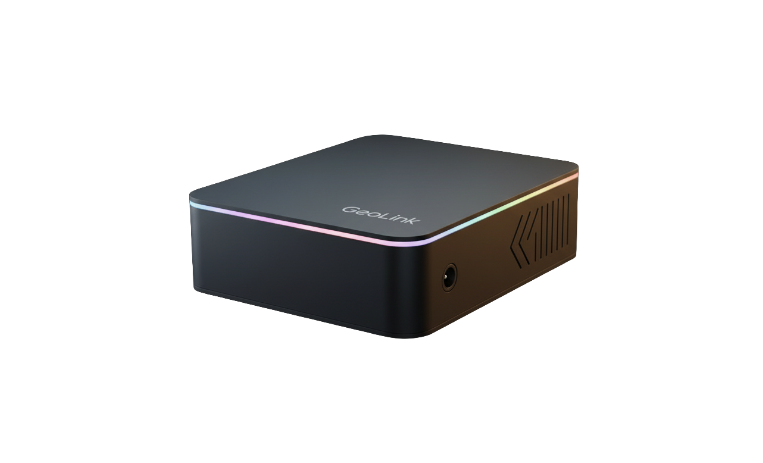
Plug & Play Seismic Station
Processor
ESP32 WROOM
Sensors
4× LSM6DSO
Sample Rate
208 Hz
Range
±2g
Advanced Analysis
Mobile App
Coming Soon
Build Your Own
For electronics enthusiasts. Download PCB files, source the parts, and build your own seismic station. Complete freedom.
Instead of expensive and few sensors, we increase spatial resolution in P-wave detection by using thousands of low-cost sensors.
Every user is a data provider. The community, not a central institution, handles system maintenance and growth.
Instead of heavy seismic data packets, we reduce analysis time to milliseconds by sending "Event Flag" with lightweight MQTT messages.
For early warning (P-wave detection), Network Density is more important than individual sensor sensitivity.
Instead of a single $10,000 geophone, using thousands of $20 LSM6DSO sensors to build a 500x denser network is the only sustainable way to detect the epicenter faster.
Raspberry Shake is a scientific archive-focused station with closed hardware/software that records full waveforms with high precision.
GeoLink is designed for early warning, open source and low cost; it captures the P-wave and validates by correlating thousands of sensors, sending lightweight MQTT event data instead of heavy waveforms.
In summary, Raspberry Shake is a single, high-accuracy station; GeoLink is an experimental early warning approach based on many cheap stations for speed and coverage advantage. They complement each other, not replace.
This is the project's biggest technical challenge. Cheap sensors alone are very susceptible to noise. Our solution is the Correlation Algorithm.
If only your device is shaking, it's noise (door slam, passing truck). However, if 10 different devices within a 5 km radius give similar signals at the same time (within milliseconds), it's a seismic wave.
Mounting the device on a fixed surface (preferably a column or beam) is critical. A device on a wobbly table or soft carpet is useless.
Also, an Early Warning System must run 24/7. Users not unplugging the device and not disconnecting internet is vital for system health.
Traditional seismometer networks (SeedLink) carry full waveforms for scientific archiving and are heavy. GeoLink is Speed Focused.
With MQTT, we only send the "EVENT DETECTED!" flag and summary data (PGA/RMS). This is the most sensible solution in scenarios where even a thousandth of a second matters for P-wave detection.
Yes, there is risk. That's why GeoLink is an experimental community project and does not replace official earthquake data from authorities.
To minimize false alarms, our algorithms require high threshold values and multi-device consensus.
GeoLink devices (ESP8266/ESP32) consume extremely low energy. Average power consumption is around 1-2 Watts.
This consumption is much lower than a modem or LED bulb. Even with 24/7 operation, the impact on your electricity bill is negligible per month.
Absolutely not. Thanks to MQTT protocol, the data sent are very small text files. You won't notice any slowdown while watching videos or playing games.
Even if the device sends data every 5 seconds while idle, since the packet headers are very small, the average monthly total data usage stays around 15-30 MB. Data-cap friendly.